
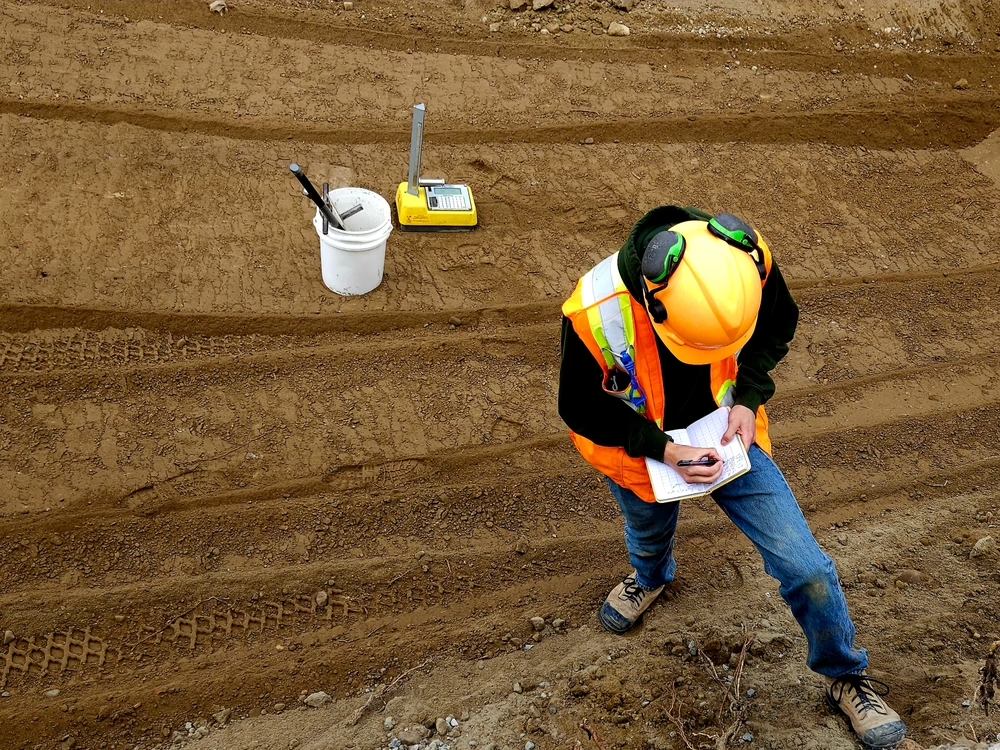
A concrete cylinder that breaks at 2,900 psi against a specified 4,000 psi mix can be a significant structural problem. On-site testing exists to find potential issues while the load can still be rejected and the mix can still be corrected. Contractors and owners arranging construction inspections in Harrisburg and across the area depend on Chapter 17 Special Inspections to document that what the engineer designed is what is placed.
What Chapter 17 Requires During Structural Concrete Placement
Chapter 17 of the International Building Code defines which construction activities require a special inspector rather than only a municipal inspection. For structural concrete, the registered design professional of record prepares a Statement of Special Inspections that becomes a condition of the building permit.
The code separates work into continuous inspection, where the inspector remains present full time, or periodic inspection, where the inspector observes at intervals. Concrete placement itself is continuous. Reinforcement placement is periodic, verified before the pour begins.
Typical Chapter 17 items on a commercial concrete package include:
- Mix design verification against the approved submittal, batch ticket by batch ticket
- Sampling and testing of fresh concrete at the point of placement
- Reinforcing steel placement, including size, spacing, cover, and lap splice length
- Anchor bolts and post-installed anchors
- Formwork geometry, shoring, and reshoring
- Curing temperature and protection methods for the required duration
The International Code Council publishes the model text that states can amend, so the inspection triggers are broadly similar, with local amendments affecting submission.
The Field Tests That Happen While the Truck Is Still on Site
Most structural issues traced back to concrete begin with a mix that was already out of specification when it left the chute. Field staff run a standard battery of ASTM tests on the first load and then at defined intervals, usually every 50 to 150 cubic yards depending on the project specification.
- Slump (ASTM C143): measured against the design value, typically within plus or minus 1 inch. A slump running high often means water was added on site, and every extra gallon per cubic yard can cut compressive strength by roughly 150 to 200 psi.
- Air content (ASTM C231): exterior concrete freeze-thaw exposure generally requires 5 to 8 percent entrained air. Too little invites surface scaling; too much drops strength.
- Concrete temperature (ASTM C1064): usually held between 50 and 95 degrees Fahrenheit at placement.
- Cylinder casting (ASTM C31): a set of four to six cylinders per sample, initially cured in the field then moved to a controlled curing environment.
Seven-Day Breaks Give an Early Strength Indication
Cylinders are tested in compression under ASTM C39, and the 28-day result is the acceptance criteria. The 7-day break is the one that helps with construction, because a normal Type I/II mix reaches roughly 65 to 70 percent of its design strength by day seven.
If a 4,000 psi mix returns 1,900 psi in seven days, the project team has more time to investigate the issue. Whether managing high-density urban placements that require construction inspection in Philadelphia or overseeing regional logistics builds, that window allows the supplier to review batch records, the engineer to evaluate the affected placement, and the contractor to keep sequencing work that does not depend on the affected element.
When the 28-day average falls short of the acceptance criteria in ACI 318, the remedies are defined rather than improvised. They usually involve core drilling under ASTM C42, in-place load testing, or a structural evaluation by the engineer of record, and the American Concrete Institute publishes the strength acceptance provisions that govern which path applies.
Rebar, Cover, and Embeds Are Verified Before Concrete Arrives
Once concrete covers the steel, verification becomes destructive and expensive. Pre-pour inspection is the last practical checkpoint, and it is where field monitoring catches the errors that cause corrosion-driven deterioration over time.
Field staff check bar size and grade against the design drawings, spacing, and clear cover, which ACI 318 sets at 3 inches for concrete cast against and permanently exposed to earth and 1.5 to 2 inches for formed surfaces exposed to weather. Chairs and bolsters must hold the mat at the specified height, since steel that sags to the subgrade provides almost no tensile capacity and corrodes quickly.
Lap splice lengths, dowel embedment into adjacent pours, and anchor bolt templates for column base plates all get inspected during construction. On projects requiring construction inspection in Philadelphia, where deep foundations and tight urban sites are common, this pre-pour work frequently also covers cap reinforcement and pile top preparation.
Weather Windows
Between November and March, overnight temperatures in the area regularly fall below freezing, which puts concrete placement under ACI 306 cold weather provisions. Concrete in sections less than 12 inches thick generally must be maintained at a minimum of 55 degrees Fahrenheit for the protection period, often three to seven days depending on the design.
Summer brings the opposite problem. ACI 305 hot weather guidance flags evaporation rates above 0.2 pounds per square foot per hour as a plastic shrinkage cracking risk, a condition produced by moderate heat combined with wind and low humidity rather than heat alone.
Documentation Is What Actually Releases the Certificate of Occupancy
Every Chapter 17 program ends with a Final Report of Special Inspections stating that the work was inspected and that all discrepancies were resolved. Municipal code officials hold certificates of occupancy against that report.
Discrepancy handling matters as much as the testing. A non-conformance identified on Tuesday and reported to the engineer early usually gets corrected promptly; the same issue discovered during closeout can stall occupancy while cores are taken and evaluated.
Frequently Asked Questions
How often does concrete need to be sampled on a commercial project?
ACI 318 requires a minimum of one strength test for every 150 cubic yards of each mix design placed per day, and at minimum once per day of placement or per 5,000 square feet of slab or wall surface area. Most project specifications tighten that to every 50 to 100 cubic yards on critical structural elements.
What happens if a 28-day cylinder break fails?
A single low break rarely condemns the concrete, because acceptance under ACI 318 is based on averages of three consecutive tests plus a floor of 500 psi below the specified strength. If they fail the ACI criteria, the engineer typically ordersnon-destructive testing or coring per ASTM C42, and the in-place concrete is accepted if the core average reaches 85 percent of design strength.
Partner with Our Concrete Special Inspection Experts
Our field staff and engineers handle Chapter 17 special inspections, ASTM concrete testing, and pre-pour verification across all commercial project phases. Call Earth Engineering at (610) 277-0880 or contact our team to review your inspection scope early in the process, before the first truck is scheduled.