
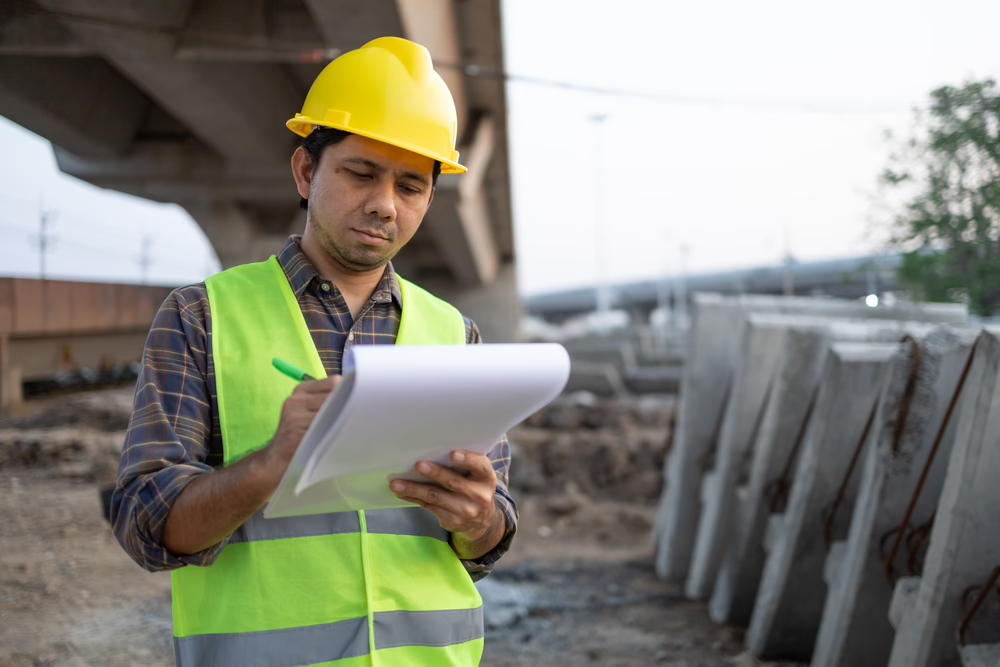
Managing a complex construction site requires meticulous coordination between specialized contracting companies and technical stakeholders. A modern construction site is a high-energy environment filled with moving parts, heavy machinery, and constant activity. When asking what construction inspection is, one must consider it the primary safeguard bridging the gap between a design and construction.
To mitigate the inherent risks of such projects, professional oversight is essential. Every phase of the build, from initial site preparation to final walkthroughs, requires a specialized set of eyes. This is where the expertise of geotechnical engineering firms in Philadelphia become invaluable. With over 30 years of experience, EEI provides the thorough monitoring and quality control needed for a project that remains legally sound and physically safe for future occupants.
Strategic Quality Assurance: Why Professional Monitoring is Essential
To fully understand the scope of this field, we must recognize it as a continuous process of quality assurance. The construction inspection process involves a series of site inspections conducted by qualified professionals to verify material integrity and workmanship. These reviews make sure that components of the building meet the rigorous standards set by engineers, the International Code Council (ICC), and the American Concrete Institute (ACI).
Without this level of scrutiny, even well-designed projects can suffer from catastrophic failures due to minor installation errors or substandard materials. A site inspection is not merely a “box-ticking” exercise; it is a critical component of risk management. By performing regular site inspections, developers can identify potential issues before they result in costly accidents or the need for expensive rework. This data-driven approach is a cornerstone of professional construction management in regions like Pennsylvania and New Jersey.
Furthermore, these inspections provide the necessary documentation to prove compliance to stakeholders and government agencies. Consistent monitoring by a firm like Earth Engineering Inc. makes sure the project creates a detailed “paper trail” of compliance. These records are also important for securing financing, as lenders often require proof of successful inspections before releasing subsequent rounds of funding. In essence, the process provides the transparency required to manage a large-scale capital investment effectively.
What Does a Construction Site Inspection Entail for Quality Control?
Explaining what a construction site inspection entails requires looking at the daily operations of a building project. An authorized professional evaluates the ongoing work against approved blueprints and safety standards. At Earth Engineering Inc., inspectors and consultants provide quality control and valuable advice for facets of earthwork and foundation construction.
This process often involves technical physical testing, including:
- Compaction Control: Using techniques to make sure the ground can support the structure’s weight.
- Footing Inspections: Verifying that the structural foundation meets specific safety standards before further build-out occurs.
- Concrete and Reinforcing Steel Inspection and Testing: Making sure the “bones” of the building have the required strength and durability.
- Structural Steel and Fireproofing Inspection: Checking welds, bolts, and protective coatings for long-term safety.
This thorough evaluation helps project managers catch minor errors before they become significant problems. A proper construction site inspection provides an objective assessment of work progress. By maintaining this level of detail, the project team can track the resolution of issues. The presence of an experienced inspector from a firm like Earth Engineering Inc. encourages contractors to maintain quality standards and discourages the cutting of corners, protecting the owner’s financial investment.
Pre-Construction and Progress Inspection Protocols
Before a single brick is laid, teams conduct pre-construction inspections and investigations to evaluate site conditions and soil stability. This initial phase identifies risks that could impact the build. Understanding the land is a critical step; assessments often involve geotechnical investigations to analyze the load-bearing capacity of the earth. Earth Engineering Inc. specializes in this “ground-up” approach, providing foundation consulting and soil modification strategies.
As the project moves into the active phase, a progress inspection is scheduled to monitor development milestones. These occur at specific intervals to make sure the work meets the project timeline. A progress inspection allows stakeholders to see tangible evidence of advancement and provides a basis for processing contractor payments. These reviews are essential for maintaining momentum and making sure any delays are identified immediately. By tracking progress through formal inspections, the project manager maintains a clear picture of the project’s overall health.
Generating Detailed Inspection Reports for Stakeholders
The culmination of any site inspection is the creation of a formal inspection report. This document summarizes findings, from minor observations to critical violations, in a clear format. Stakeholders rely on these reports to understand the status of their investment and identify risks to the schedule or budget.
A professional report from Earth Engineering Inc. focuses on providing:
- Relevant Foundation Information: Detailed data on soil and structural stability.
- Reliable Materials Testing Data: Verification of concrete, steel, and masonry quality.
- Expert Guidance: Realistic solutions for identified problems.
Finally, the report serves as a legal document in the event of future disputes or insurance claims. Keeping a meticulous archive is a best practice for firms like Earth Engineering Inc. to protect their clients from future liability. These records prove the team took necessary steps towards quality and compliance.
Conclusion: The Future of Site Oversight
In conclusion, understanding the intricacies of construction inspection in Philadelphia is vital for anyone in the building industry. From the initial pre-construction review to the final snag list, these inspections are the key to project success. As technology evolves, inspections will become even more data-driven through AI, drones, and advanced software. However, the judgment and expertise of a professional inspector cannot be replaced.
By prioritizing site inspections and building regulation compliance, we create communities that stand the test of time. Whether through manual checklists or digital platforms, the commitment to quality must never waver. Specialized firms like Earth Engineering Inc. continue to provide the unparalleled support needed from groundbreaking to project completion. Quality is not an accident; it is the result of consistent, professional oversight and a dedication to doing things right. Contact us today to get started on your construction site inspection.