
You’re about to sign the paperwork on a property acquisition that could define the next chapter of your business. The location is perfect, the price is right, and everything seems straightforward. Then someone mentions environmental liability, and suddenly you’re wondering what’s buried beneath that parking lot.
One underground storage tank leak or legacy contamination issue could turn your smart investment into a financial nightmare. That’s the moment you realize you need a Phase I ESA.
Understanding What a Phase I Environmental Site Assessment Is
A Phase I Environmental Site Assessment is a thorough investigation of a property’s environmental condition and history. Think of it as due diligence that protects you from inheriting someone else’s environmental problems. Unlike a Phase II assessment that involves actual soil and groundwater sampling and analysis, a Phase I ESA is non-invasive. It relies on research, interviews, and visual inspection to identify potential or existing environmental contamination.
The assessment follows ASTM E1527-13 standards, providing a consistent framework that environmental professionals use to evaluate properties. When conducted properly, a Phase I ESA qualifies you for liability protection under CERCLA through the “innocent landowner defense” under All Appropriate Inquiries.
This liability protection is crucial. Environmental contamination discovered after purchase can become your legal and financial responsibility, even if you didn’t cause it. Cleanup costs can reach hundreds of thousands or millions of dollars depending on the contamination type and extent. A Phase I ESA helps you avoid that scenario by identifying red flags before you commit.
The Core Components of a Phase I Environmental Site Assessment
Records Review and Historical Research
Environmental professionals start by diving deep into property records, looking for past uses that might have introduced contaminants. A property that once housed a gas station, dry cleaner, auto repair shop, or industrial facility carries higher environmental risk.
Some of this research includes:
- Reviewing historical aerial photographs to track property use changes over decades
- Examining fire insurance maps and city directories to identify previous occupants and activities
- Checking regulatory databases for records of contamination, storage tanks, and hazardous waste sites
- Analyzing building permits and zoning records that reveal historical property use
- Investigating adjacent properties because contamination from nearby sites can migrate through soil or groundwater
The records review extends beyond the subject property. Environmental professionals examine surrounding properties within specific radius distances to identify potential contamination sources that could affect your site.
Site Reconnaissance and Physical Inspection
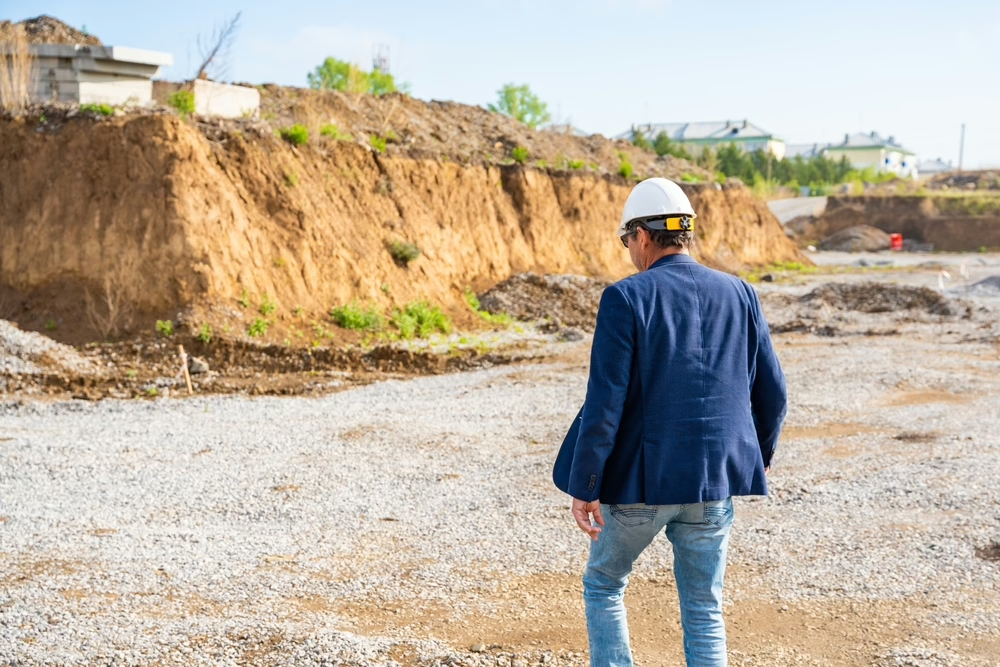
After the paper trail comes the on-site investigation. An environmental professional walks the property, documenting current conditions and looking for warning signs of contamination through systematic inspection.
During the site reconnaissance visit, the environmental professional documents:
- Current property uses and activities involving hazardous materials or petroleum products
- Evidence of storage tanks including fill ports, vent pipes, or stained soil
- Chemical storage areas and material handling practices
- Staining on floors, walls, or soil indicating spills or leaks
- Drainage patterns and stormwater systems that might spread contamination
- Waste disposal practices including hazardous waste handling
The professional also takes photographs, creating a visual record of property conditions. These photos become valuable documentation if questions arise later about observations of the site conditions at the time of the site reconnaissance.
Interviews With Key Parties
Information from people familiar with the property often reveals details that records and visual inspection miss. Environmental professionals interview current owners, occupants, property managers, and sometimes neighboring property owners or former employees.
These interviews explore past spills, chemical use, waste disposal practices, environmental cleanups, and concerns that might not appear in official records. Sometimes a casual mention about “that old tank we removed years ago” leads to discovery of incomplete closure documentation or residual contamination.
When Do You Actually Need a Phase I Environmental Site Assessment?
Commercial Real Estate Transactions
This is the most common trigger for Phase I ESAs. Lenders typically require them before financing commercial property purchases. They want assurance that their collateral won’t lose value due to environmental contamination. Buyers want the same assurance, plus protection from inheriting cleanup liability.
Even without a lender requirement, getting an assessment is smart risk management. Environmental problems discovered after closing become your responsibility. The cost of a Phase I ESA is minimal compared to potential cleanup costs.
Property Development Projects
Before breaking ground on new construction or redevelopment, understanding environmental conditions is essential. Contamination can delay projects, increase costs dramatically, and create legal complications. A Phase I ESA conducted early in planning lets you factor environmental issues into your timeline and budget.
For properties with suspected contamination, developers might participate in greenfield or brownfield redevelopment programs offering incentives and liability protections.
Business Acquisitions and Mergers
When acquiring a company that owns real property, you’re potentially acquiring environmental liability along with assets. Phase I ESAs on all owned or leased properties help you understand the full scope of environmental risk before finalizing the deal.
This becomes particularly important in industries with high contamination potential like manufacturing, chemical processing, automotive services, or fuel distribution.
Lease Agreements
Commercial tenants sometimes commission Phase I ESAs to document baseline environmental conditions when moving into a property. Without this documentation, departing tenants might face claims that they caused contamination that actually predated their lease.
Property owners also benefit from Phase I ESAs when leasing to tenants in high-risk industries, establishing property conditions before the tenant arrives.
What Happens After a Phase I Environmental Site Assessment?
The Report and Its Findings
Environmental professionals compile their research, observations, and interviews into a comprehensive report typically running 50 to 150 pages. The report includes an executive summary highlighting key findings and conclusions.
Phase I ESA reports categorize findings into specific terms:
| Finding Category | Definition | What It Means For You |
| Recognized Environmental Condition (REC) | Known or suspected contamination with reasonable likelihood of affecting the property | May require Phase II testing with soil and groundwater sampling |
| Historical REC (HREC) | Past contamination addressed to current standards | Generally low risk but worth monitoring |
| Controlled REC (CREC) | Contamination addressed with controls or restrictions in place | Ongoing compliance obligations you’ll inherit |
| No RECs Identified | No evidence of contamination found during assessment | Lowest environmental risk based on available information |
Moving Forward Based on Assessment Results
If your Phase I ESA identifies no environmental concerns, you can proceed with increased confidence. The assessment provides liability protection and peace of mind.
When the assessment identifies potential contamination, you have several options:
- Commission a Phase II Environmental Site Assessment through soil and groundwater sampling
- Negotiate price adjustments with the seller to account for environmental risk
- Request that the seller address environmental issues before closing
- Walk away from the transaction if liability exceeds your risk tolerance
- Structure the deal with environmental contingencies that protect you from unexpected costs
A Phase I ESA gives you information to make informed decisions rather than operating blind regarding environmental risk.
Common Misconceptions About Phase I Environmental Site Assessments
“My Property Is New Construction, So I Don’t Need One”
New buildings don’t guarantee clean soil beneath them. The land itself might have historical contamination from previous uses. Phase I ESAs investigate property history precisely because current conditions don’t tell the whole story.
“Visual Inspection Didn’t Show Problems, So Everything’s Fine”
Many serious environmental problems remain invisible during visual inspection. Underground storage tanks, subsurface contamination, and groundwater issues don’t always show obvious surface indicators. That’s why Phase I ESAs combine multiple investigation methods.
“Phase I ESAs Are Just Paperwork Requirements”
While lenders require them, Phase I ESAs serve a more important purpose. They protect you from massive financial liability and help you make informed business decisions.
The Cost-Benefit Analysis of Phase I Environmental Site Assessments
Phase I ESAs typically cost a few thousand dollars depending on property size, complexity, and location. Compare that cost to potential cleanup expenses. Simple contamination cleanup might cost $50,000 to $100,000. Extensive groundwater contamination can reach millions. Even moderate soil contamination requiring removal can easily exceed $200,000.
Beyond direct cleanup costs, environmental contamination creates additional financial impacts:
- Property value decrease that can exceed cleanup costs
- Inability to sell or refinance contaminated property
- Development delays costing tens of thousands in lost opportunity
- Legal fees defending against environmental claims
- Ongoing monitoring and maintenance obligations
- Regulatory penalties for non-compliance
Spending a few thousand dollars on a Phase I ESA in Harrisburg and other areas becomes one of the most cost-effective risk management investments available in commercial real estate.
Why Professional Expertise Matters in Environmental Assessments
The quality of your assessment depends entirely on the knowledge, experience, and thoroughness of the environmental professional conducting it. Qualified environmental professionals understand the subtle indicators of contamination that inexperienced assessors might miss. They know which historical uses present the highest risks and where to focus investigation efforts.
OSHA-trained staff bring additional expertise in identifying problems accurately and defining the extent of potential contamination. This training ensures they can coordinate with regulatory agencies effectively if issues are discovered.
What Happens If Your Phase I ESA Identifies Contamination?
When a Phase I ESA identifies recognized environmental conditions, the next step is typically a Phase II Environmental Site Assessment. This investigation involves actual subsurface exploration through sampling such as drilling methods hand augering, split spoon sampling, hollow stem auger, mud rotary, push probe techniques, and soil vapor probes.
Phase II assessments collect soil and groundwater samples for laboratory analysis to determine if contamination exists, what contaminants are present, and the extent of the problem. The detailed site characterization from Phase II work helps you understand actual risks rather than just potential concerns.
If contamination is confirmed, you’ll need remediation oversight services to ensure cleanup work complies with regulatory requirements. Professional supervision keeps everyone working at the site safe and ensures contaminated materials are removed according to proper standards. This continues until regulatory agencies approve site closure, which might involve PADEP Act 2 compliance in Pennsylvania or working with Licensed Site Remediation Professionals (LSRP) in New Jersey.
Environmental professionals can also assist with underground storage tank assessments and closures, well monitoring programs, and ongoing regulatory compliance as properties move through the cleanup process.
Partner With Environmental Professionals Who Understand Your Risk
Earth Engineering Incorporated’s trained environmental staff assists clients in identifying environmental problems, accurately defining the extent of contamination, coordinating with regulatory agencies, and oversight of remedial activities. An environmental investigation can be completed in conjunction with geotechnical soil testing in NJ and other areas to achieve some economy.
With experience in Phase I and Phase II Environmental Site Assessments, site characterization, remediation oversight, and regulatory compliance throughout the Mid-Atlantic region, EEI focuses on cost-effective solutions that keep your projects moving forward. Contact Earth Engineering to discuss your environmental assessment needs.